Méringue: An Analysis of the Dance Genre and Its Storytelling of the Political and Social History of Haiti
by Kaitlyn Hartman
Mary Frances Early College of Education
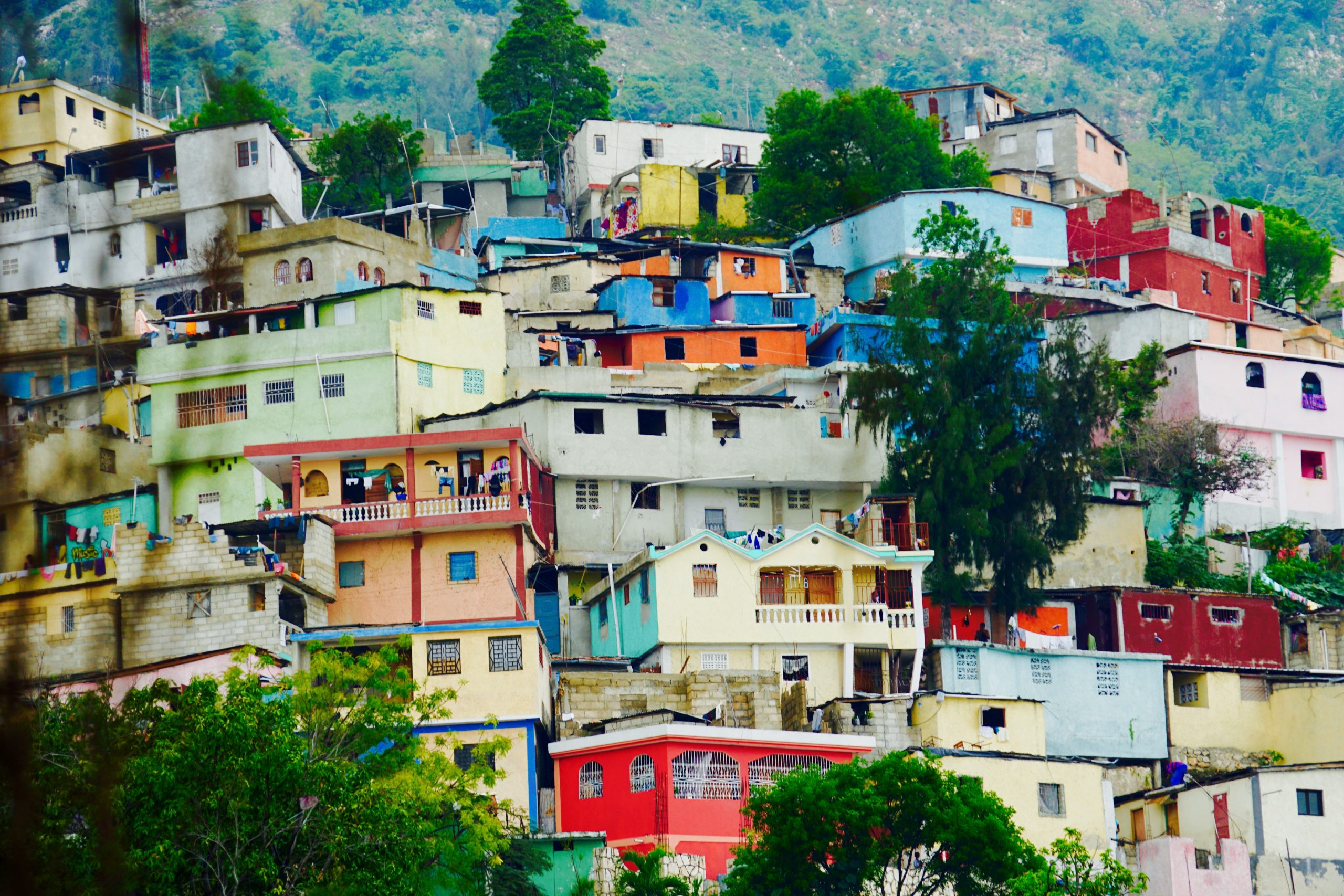
Studying music allows researchers to examine how music makes meaning, especially within societies and cultures. As one might infer, the meaning music creates can be strikingly different around the world, and different places might share connections between meanings. Ethnomusicology, the study of music of different cultures, compares these meanings and examines how music has impacted a culture’s history, social, and political life. Ethnomusicology is a broad field in itself, yet, Titon’s four components of music makes studying and comparing music globally easier. Within the music genre of méringue, Titon’s model reveals the political, cultural, and social climate of Haiti and the Dominican Republic. Much research has been done on the songs within Haitian méringue, but few have yet to consider how this genre tells of the history of these two countries. With this focus, this paper investigates the question, “How does Haitian méringue narrate the country’s social and political history?” Through analyzing popular meringue songs and their connections to Titon’s four music components–ideas about music, activities involving music, repertoires of music, and the material culture of music–this paper offers an insight into a genre and a history of a place that continues to find joy, expression, and protest when facing political, social, and economic turmoil.
Titon’s four components of music, Haitian méringue, Haiti, Dominican Republic, Ethnomusicology
Ethnomusicologists have long studied the origins, motivations, and processes behind music and its relationship with humans. While overtly broad as a field, researchers study and compare music globally through Titon’s definition of music. Titon’s model can be applied to many genres, instruments, and artists, and information organized into these components reveal the stories and music cultures found globally. One topic of study, the dance genre méringue, has inspired research comparing the Haitian méringue with its Dominican origins. Haitian méringue is a genre of dance music with European and African influences that formed alongside the creation of the liberated Haitian and Dominican Republics. Learning of this convoluted history sparked a personal interest about how méringue was able to tell the story of Haiti, specifically, the history of its land and its people. Such a curiosity is what this particular research aimed to remedy. Specifically, this research will investigate, “How does Haitian méringue narrate the country’s social and political history?” The storytelling of méringue offers insights into the cultural significance of the music in the Caribbean and how it compares to the importance in other countries.
To discover how méringue stories Haiti politically and socially, it is imperative to understand its history. After Christopher Columbus set foot, colonizers enslaved the native population, imposed European control, and killed thousands (Center for Applied Linguistics 1982, 8). Spaniard colonization then replaced the natives with African slaves from Congo, Senegal, the Ivory Coast, and Benin in West Africa. Then, during the 1620s, the French established “small military outposts” on a nearby island, started to challenge the established “Spanish authority over” the colony of “Hispaniola,” and eventually occupied major parts of the colony (Center for Applied Linguistics 1982, 8). Splitting Hispaniola in half, the French claimed the West while the Spanish claimed the east. In the late 1700s, after news of the French Revolution, the African slaves began a rebellion to gain their own freedom. Not only did such people rid the French of their colony (twice), but they also attempted to oust all European control of the island by controlling the future capital, Santo Domingo (Davis & Austerlitz 2001, 1). However, Santo Domingo called on Spain to oust the Haitians, establishing the Dominican Republic (Davis & Austerlitz 2001, 1). While originally occupied by Spain, those from the Dominican Republic tend to celebrate only gaining freedom from Haiti, not from Spain. Considering Titon’s four music-culture components, méringue communicates the histories of both Haiti and the Dominican Republic in the word itself. Méringue has two popular spellings: méringue and merengue. During the Haitian occupation of the Dominican Republic, it is said that troops brought along a dance known as the carabiniere. Inevitably, “the Dominicans picked it up during the 30 years of occupation, but gave it their own name (merengue), and the name went back to Haiti along with the troops and a French accent, hence, méringue (Méringue! 1958, 2). For clarity, uses of méringue will refer to the Haitian dance genre, while uses of merengue will represent the Dominican dance genre. But of greater importance, even the name of the genre tells a story: one of the migration of the dance genre during a turbulent political time for the Dominican Republic and Haiti.
After the establishment of Haiti, the free land experienced a series of unstable governments. To restore a stable government, President Woodrow Wilson deemed it necessary to occupy Haiti from 1915 to 1934. From there, many leaders governed Haiti: some through “military takeovers,” others through “questionable electoral processes,” like the violent regimes of Dr. Francois Duvalier (Papa Doc) and his son Jean-Claude Duvalier (Baby Doc) (Center for Applied Linguistics 1958, 9). Consequently, “Haiti is one of the poorest nations in the Western Hemisphere; [the] Haitian economy is controlled by the upper class, a very small part of the population which earns over 50% of the country’s income” (Center for Applied Linguistics 1958, 10). Poor access to education furthers this economic gap, as a majority of the population lives in poverty. Addressing Titon’s first component of music: ideas of music, the beliefs created from the social and political climate of Haiti can be seen through the stories in méringue. For example, the song, “Panama m’Tombe” (the fallen hat), discusses the shared dislike of Haitian president Hyppolite. The song tells of a “day in 1897 [when] President Hyppolite of Haiti lost his hat while on the way to quell an insurrection. As it happened, Hyppolite suffered a fainting spell and died a few days later” (Haiti Confidential 1958, 2). Additionally, it was as if Panama m’Tombe “was composed gleefully and almost instantaneously, giving both song and title lasting significance” (Haiti Confidential 1958, 2). The song created the ever-present message that a fallen hat was a bad omen, and if one were to fall, it should not be picked back up. Through méringue, the song reveals Haitian attitudes towards Hyppolite. Many Haitians disliked him and used méringue to warn against following his actions to avoid the same fate. The genre retells the beliefs during a period of unstable government.
Another belief of Haitians socially is the “importance of family life” (Center for Applied Linguistics 1982, 12). The extended family often stays within the same home as the immediate family, and both women and men are expected to work and share both “household duties and financial responsibilities” (Center for Applied Linguistics 1982, 12). This belief of family is exemplified through a méringue from the 1930s titled “Fanm se Larèn Soley (Women are Sun Queens)” by a popular Haitian musician, Auguste ‘Candio’ de Pradines. Through his lyrics, Candio “pointed out the reprehensible behavior of many men in a patriarchal and macho society…[m]en who abuse women and children are not worthy to wear pants” (Caribbean Popular Dance-Hall Music, 2024). This line directly reflects the social ideals of family life in Haiti. Women had more inclusive gender roles and expectations. Therefore, it is expected that they would be treated as such.
Examining the second music-culture component, activities of music, the history of Haiti lends itself to many musical events, most including méringue. Ethnomusicologists Grenier and Averill explain that “throughout most of the 19th and 20th centuries, the méringue was a national genre, danced at rural informal parties, and at working-class bars and at high-class soirées (especially after anti-American sentiment during the US occupation fueled a nationalist movement among the élite)” (2001, 12). So, méringue was a genre performed by all and it ignored the class divide. However, while it may not have been used as a protest economically, Grenier and Averill argue that Haitians used méringue politically as a symbol of hatred for the United States’ occupation.
While played in many environments, musicians performed méringue at specific events in Haiti, specifically, within the Haitian religion Vodou. Vodou is a “monotheistic religion that incorporates specific spirits, called lwa in Haitian Creole, that are honored in ceremonies, in shrines, and in life as a means of ultimately worshiping Bondye, also known as God” (Levine 2023, 2). Examining méringue through Vodou reveals the history of such an event. Due to French colonization, and more specifically slavery, “there was a form of syncretism among many Haitians between the Vodou lwa and Catholic saints” (Levine 2023, 4). When the French took control over Haiti, colonial authority placed societal pressure on Haitians for practicing Vodou. Many “slave owners and other colonial authorities worried about any unifying tradition…between enslaved peoples because they feared it could lead to revolt” (Levine 2023, 5). Consequently, French leadership basically outlawed Vodou, which made practicing Catholicism much safer. With this idea, practicing Vodou and engaging in these ceremonies with méringue was not just brave; it was a way to create cultural unity and strengthen Haitian identity during enslavement and colonization.
Another specific event involving méringue is one called Carnival. From Averill’s journal, Ethnomusicology, he explains that “Carnival is the most important annual music in urban Haiti” and is “permeated with political meanings” (1994, 2). Carnival involves much singing, dancing, and floats in parades, yet it is also used to combat the faults of the nation. To start, Carnival, or the lack thereof, has been used as a political protest. In 1926, the “police were forced to disperse a demonstration by a masked carnival entourage protesting the reelection of collaborationist President Louis Borno”, while in 1928, the “Cercle Bellevue cancelled its carnival grand ball to protest the incarceration of some of its members by the American-led Garde d’Haiti” (the national guard of Haiti) (Averill 1994, 5). Aside from protests, some carnivals simply poked fun. For example, at Carnival in 1959, “gwo tet (large heads, an old European masque) mimicked politicians and well-known figures” while parading in the street. Carnival makes statements; it is not only a celebration, but it is a critique of the nation as a whole (Averill 1994, 6). The events or activities of music have stories. Knowing where méringue is performed allows the stories of Vodou, Carnival, and the general nightlife of Haiti to be discovered and told.
Within Titon’s third component, repertoire, there is an important story when investigating the transmission of music. Authors Cela et al. explain in their article, “Migration, Memory and Longing in Haitian Song,” that “Haiti’s history has the indelible mark of voluntary and involuntary migration” (2022, 3). To begin, African slaves were “forcibly brought to the island as early as the 15th century” (Cela et al. 2022, 3). This is about when méringue started appearing in Haiti as well. It is argued that méringue “evolved from the music of the Kongo-Luongo-Angola people brought to the New World during the 15th – 17th centuries” (“Caribbean Popular Dance-Hall Music,” 2024). The main cause of migration and transmission of music is mostly due to the political environment of Haiti. After successfully revolting against the French, there was a “significant outmigration to France and its colonies,” while U.S. occupation from 1915-1934 “stirred rural migration” to the Dominican Republic “due to the nations’ shared border, Haiti’s political instability, and US investments in the DR sugar economy” (Cela et al. 2022, 3). The combination of political control of Santo Domingo (capital of the Dominican Republic) in the mid-1800s and Haitain migrants from Haiti to the DR introduced dances like méringue to the region. It can be presumed that the name change from méringue to merengue also happened around this time. As Haiti experienced terrible regime after regime, the migration rates continued to grow, and wherever they found a new home, méringue did as well. Many traveled throughout the Caribbean, as well as to the U.S and Canada.
Now understanding the rates of migration in Haiti, how do their songs represent such histories and obstacles of life? Cela et al. address this as well: “Migration music occupies a distinct space in ethnomusicology…much of the migration music emanating from Haiti details the structural inequalities and environmental conditions that have compelled their compatriots to leave” (2022, 6). Continuing to explore the repertoires of music, a subgenre of méringue, Konpa, captures this idea of migration music quite well. In “Mizik Mizik’s 2000 Haitian konpa song titled, ‘Sa Pou n Fe (What Are We to Do)’…the lyrics suggest that the song’s protagonist is a rural dweller” (Cela et al. 2022, 7). “Sa Pou n Fe” describes an obstacle that led many families to leave Haiti: hunger. In the song, the use of the word “lamanjay — a rural term for food — to references to land that is no longer productive, this family’s deeply personal experience of hunger is not uncommon” (Cela et al. 2022, 7). Such a problem highlights the current economic state of the time. Haiti experiences a major economic gap due to being mostly controlled by the upper class. So, through a subgenre of méringue, the stories of the social history of Haiti are discussed and expressed in music.
Entering méringue repertoire stems from signifiers found in the musical analysis of Haitian méringue. Ethnomusicologist William Gradante claims that méringue can “be in duple and triple meters, sometimes creating 5/8 effects” and that “Afro-Cuban cinquillo and tresillo rhythmic figures are predominant” (Gradante 2001, 1). From the albums “Meringue!” and “Haiti Confidential”, most songs were in a duple meter rather than a triple meter. Additionally, “with a call-and-response vocal structure…the verses of the merengue use typical Hispanic copla (quatrain) and estribillo (refrain) form in a European-style couple dance with African influence, involving hip and pelvis movements” and requires “digging from the hips down, particularly with the feet” (Gradante 2001, 1) and (Méringue! 1958, 2). Though, not all méringues follow every feature described by Gradante. Many songs are instrumentals or unison singing, though most songs have four-line stanzas that went into a refrain! Unsurprisingly, such performance techniques and playing styles showcase a European and African influence. Without a trace of natives, the only people there to shape the music of Haiti were the people who were displaced there and the people who conquered the land. This idea also translates into the material culture of Haitian méringue.
Finally, when examining méringue through Titon’s fourth music-culture component, material culture, it continues to story the social and political history of Haiti. Gradante explains that musicians perform méringue by a plethora of instruments, some of which have changed over time. Gradante states that “rural traditional merengue típico or perico ripiao…was formerly played on stringed instruments of the guitar family but is now performed using the accordion, the güira or guaya (scraper), the tambora (double-headed hand drum) and sometimes the marimba or the marímbola (large lamellaphone)” (Gradante 2001, 1). From this list, the stories of these instruments become clear; the changes from traditional méringue to its more modern form stem from the influence of Europe and Africa back in the 1600s. With the arrival of slaves and French leaders, historically European and African instruments like the accordion and marimba could have easily been introduced into Hispaniola. Combining this idea with the heavy migration in Haiti offers a way of transmitting these instruments not just throughout Haiti, but through the Caribbean. With such a vast list of instruments to choose from, the instrumentation expected for méringue depends on the context of the event. Méringues “are played using only percussion instruments after a Vodou ceremony has ended, as parlour méringues (méringues lentes) for élite audiences by chamber groups of piano and strings, in dance halls and hotels by orchestras and in the streets, at festivals and hotels by small troubadou (troubadour) or mizik gwenn siwèl (‘nougat’) ensembles” (Grenier and Averill 2001, 12). Such ensembles typically “use a conga drum, maracas, a malimba (a large lamellaphone) and a string instrument such as a guitar or banjo” (Grenier and Averill 2001, 12). Unsurprisingly, most of these instruments also did not originate in Haiti. “This instrumentation was strongly influenced by the Cuban son trovador style brought to Haiti by Cuban radio, returning Haitian cane workers, and middle-class tourists” (Grenier and Averill 2001, 12).
On a base level, many music listeners may hear music in genres, styles, or compositions that are different from what they are used to. However, very few actually know why those differences occur and what histories and events made music around music different from one another. To list every difference and story of a piece of music would be tedious and overwhelming. That is beyond the scope of this paper. Utilizing Titon and his components not only organizes this information, but it also makes it more digestible to non-musicologists like myself. There is an importance of learning about the world beyond what’s in your backyard. Understanding the stories of music around the globe not only creates a way to compare and understand humans, but learning about others and their faults, obstacles, and successes creates better, more empathetic people in the world.
References
Averill, Gage. 1994. “Anraje to Angaje: Carnival Politics and Music in Haiti.” In Ethnomusicology 38 (2): 217–47. https://doi.org/10.2307/851739.
“Caribbean Popular Dance-Hall Music.” (2024). The continental counterpoint. https://portal.onmusichub.com/moolesson/the-continental-counterpoint-4/.
Cela, Toni, Kéthia Charles, Pierre Rigaud Dubuisson, Olriche Fortin, Dabouze Estinvil, and Louis Herns Marcelin. 2022. “Migration, Memory and Longing in Haitian Songs.” Zanj: The Journal of Critical Global South Studies 5 (1 and 2): 193-227. https://doi.org/10.13169/zanjglobsoutstud.5.1.0013.
Center for Applied Linguistics, Washington, DC. 1982. Language and Orientation Resource Center. The People and Culture of Haiti.
Davis, Martha Ellen, and Paul Austerlitz. “Dominican Republic.” Grove Music Online. 2001. https://www.oxfordmusiconline.com/grovemusic/view/10.1093/gmo/9781561592630.001 .0001/omo-9781561592630-e-0000044000.
Gradante, William. 2001. “Merengue.” Grove Music Online. https://www.oxfordmusiconline.com/grovemusic/view/10.1093/gmo/9781561592630.001 .0001/omo-9781561592630-e-0000018440.
Grenier, Robert, and Gage Averill. 2001. “Haiti.” Grove Music Online. https://www.oxfordmusiconline.com/grovemusic/view/10.1093/gmo/9781561592630.001 .0001/omo-9781561592630-e-0000044832.
Haiti Confidential: Panama m’Tombe. 1958. Edited by Carter Harman. Cook Records. https://search-alexanderstreet-com.us1.proxy.openathens.net/view/work/bibliographic_en tity|recorded_track|247863.
Levine, Caroline. (2023). “Religion and Power in Haiti: An Evaluation of Catholic Syncretism in Haitian Vodou.” Delos: A Journal of Translation and World Literature 38 (1): 41-67. http://dx.doi.org/10.5744/delos.2023.0003.
Meringue! 1958. Cook Records. https://search-alexanderstreet-com.us1.proxy.openathens.net/view/work/bibliographic_en tity|recorded_cd|73163.
Acknowledgements: Kaitlyn thanks Dr. Jean Kidula for the opportunity to write this paper, Dr. Cathy Murphy and the AP Capstone program, and her mom for her support in the class from which this paper stems.
Citation Style: Chicago B